Grazing plans are fun to make, but they can be challenging. The thing to remember is that you need to understand your context first before you begin drawing out fencelines. Once you’ve established your situation, you can begin to hash out the details of your grazing plan.
In this series, I’m using a mock grazing plan I developed for a presentation on this topic. This precludes using an existing grazing plan from my past clients, as they may not allow me to use it. And, it’ll really help to illustrate what I’m talking about, especially if you’re new to the whole grazing plan thing.
While the grazing plan very likely won’t be implemented (a wide variety of personal and family-related factors prevent it), it is placed on an existing parcel of land that I know quite well from my past. It’s on the land of the farm where I was born and raised.
As I develop the grazing plan[s] for this piece of land, I will provide various tips and tricks along the way for you to note. These tips and tricks will be in ITALICS.
This four-part series is divided up as follows:
- Part I (this post) involves identifying goals and objectives, and answering the question, “where are we at now,” or “what is our current situation?”
- Part II involves identifying the different physical plans (laying out where fences and water lines go) that could be put into place.
- Part III goes into both the types of materials to use for fencing and water, plus all the costs associated with them.
- Part IV is going over the grazing chart (as developed by Holistic Management Canada) and grazing tables to really nail down what it looks like when you’re working on a grazing plan for the year, as well as tips on how to determine the forage yield, stocking rate (or cow-days per acre), and stock density so that you can turn your rotational grazing plan into an adaptive multi-paddock grazing (AMPG) plan based on the teachings of Jim Gerrish, Allen Williams, Joel Salatin, Greg Judy, and many others.
(IF YOU’RE A CANADIAN PRODUCER LOOKING TO APPLY FOR THE ON-FARM CLIMATE ACTION FUND (OFCAF) PROGRAM HELD THROUGH THE CANADIAN FORAGE & GRASSLAND ASSOCIATION (CFGA), THIS SERIES WILL HELP YOU APPLY FOR FUNDING. Please contact your local mentor for assistance if you need help beyond what I’ve covered in this plan.)
Identifying Goals & Objectives
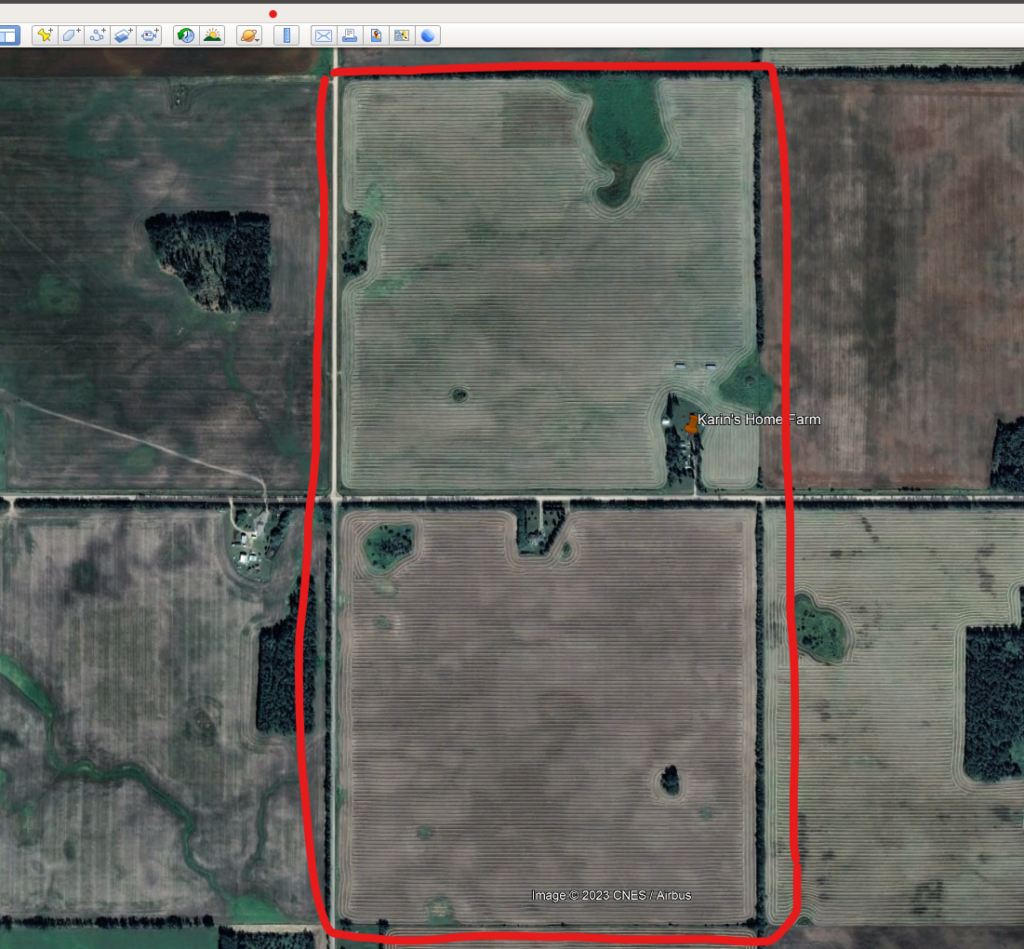
My main goal is to do regenerative grazing on two quarter sections of land (310 acres total, excluding both acreages: called “Home Quarter” to the north, and “South Quarter” to the south) where I build soil back from major crop production performed year after year, provide ample forage for my animals, provide suitable habitat for wildlife including pollinators, birds, amphibians, and the occasional deer, coyote, fox, or other mammalian specie that comes through.
The main use for the two quarters will be grazing; however, I would like to allow for hay equipment to come through as well in very good years where forage growth is faster than I can move my animals, and some paddocks will need to be hayed to keep up with production.
I also want to preserve the “natural areas” on the farm. There is only one area that I feel should receive the most attention: a 1.58-acre treed area on the west edge of the home quarter, which has been home to amphibians, an ephemeral pond, and various woody species. The other areas that are ephemeral wetlands will be included as part of the grazing plan, as they haven’t shown (yet) to be as important as the “sensitive habitat” previously mentioned. (If this were a real grazing plan, I would be sure to mention that I will be monitoring these other ephemeral wetland areas for any changes in habitat as the grazing seasons go on, and make changes to the fencing/grazing plans as necessary to bolster their presence as a legitimate sensitive habitat for aquatic and semi-aquatic life.)
Grazing in a way that allows for high-quality forages helps my animals gain weight, ensuring they are heavy enough to sell to finisher programs for market.
I also wish to create this grazing plan in a way that is as low-cost as possible and doesn’t require an exorbitant amount of labour; pasture planning should promote the easy movement of cattle from one paddock to another.
Animals and Paddocks
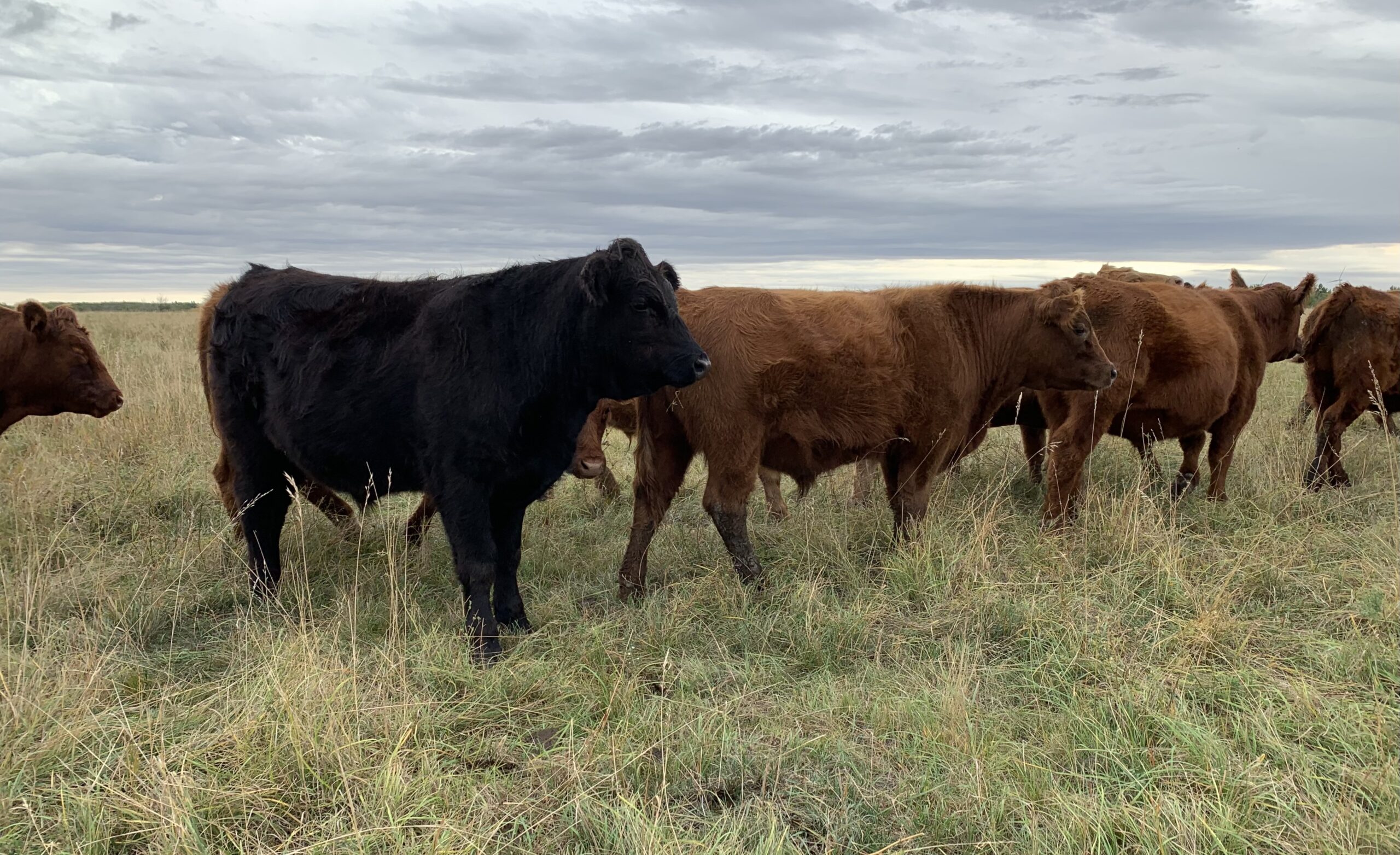
I intend to graze 200 head of yearling stocker steers, starting weights of around 700 pounds, goal end-weight of 1000 pounds or more. They are expected to start grazing on May 15th (plus or minus a couple of days) and finish on September 31st. I wish to build a multi-paddock adaptive grazing system where I move animals daily. It’ll give me the option to move them every two days (at the most) or twice daily or more. It will depend on what areas need more “love” through animal impact via higher stock density than normal. That means my rest period is intended to be 65 days, with a utilization rate of 50 to 60 percent.
Based on my calculations from above, that means I will need to build 65 paddocks, about 4.5 acres per paddock. However, if I want to move twice daily, I will need 130 paddocks. If I want less frequent moves, like once every two days, I only need 32.5 paddocks. That is when I combine both the home and south quarters in the plan.
Waterers & Waterlines
I’m also open to different types of plans; I’m not opposed to having lanes, getting cattle to a central water source, using mobile waterers, or multiple water stations supplied by temporary waterlines. (I will provide multiple plans to showcase the different choices I have to choose from on my landbase. Note that this may be much different for your context.) However, because I’m grazing so many animals (more than Dad did, which was a maximum of 60 to 70 head of stocker steers on 100 acres of just one quarter section over ~160 days), I want to make the water source issue a bit easy for the animals so that 1) they don’t have to travel a maximum of half a mile for water, and often all at once, and 2) trampling and cow-trail making is minimal.
Because both quarter sections are divided by a main public road (gravel), I will need two primary water sources. Fortunately, the “home quarter” (north quarter) already has a well plus two permanent cattle waterers located on the home acreage. Unfortunately, these waterers are small and designed to only water about 60 head at a time. I would expect, if at least double that came up to drink, it would take a long time for the animals to get enough to drink, as they would all be crowding around and competing for their turn at the waterer[s]: much longer than it had taken 60 head to do in the past. Therefore, because I don’t want it to happen again, it will be best to run water lines from the main well so that either a mobile water source is used (and possibly moved) wherever animals are moved to graze, or a second primary water source is built in the centre of the quarter for animals to have easy access to. This would look like either a dugout or one of those large tractor-tire stock-tank waterers that can water 50 head at once.
The south quarter, however, has no water sources installed. This will need to change to a well or a dugout. It may be cheaper to build a rain-fed dugout and either build the fencelines so that animals go directly to the dugout to drink (an outside waterer is installed so that animals don’t contaminate the dugout edges with trampling and manure), and use it supply other water sources to the east, south, and/or west via gravity-fed lines. The slope of the land is ideal for gravity-fed water lines rather than solar- or gas-powered pumps.
Permanent & Temporary Fencing
The home quarter already has a permanent perimeter fence installed, so I will not need to build one (except to address any repairs it may need). The south quarter will require a permanent perimeter fence on all four sides, including bordering the neighbour’s acreage picket fence (which is not suited for excluding animals). In part III, we will go over materials, but this fence would be a five-strand barbed-wire fence. Gates will be installed on the three main approaches (see next section below) on the south quarter, and two main gates on the south border of the home quarter.
Internal cross fencing will be required, which will come in the form of a semi-permanent hi-tensile double-stranded electric fence. This will be designed to divide both quarters into four parts, with each part available for temporary electric fencing.
Temporary electric fencing will give me great flexibility to create the best paddock sizes I need for my herd, depending on forage yield, my high-impact grazing goals, and how often I want to move my animals. I want to use fibreglass pig-tail posts or step-in posts that allow for two or more strands of fencing. The latter will be important for training these steers to respect the fence and daily moves. Standard electric fencing wire will be used, along with fencing reels to make setting up and taking down fences easier. A strong power source would have enough gigajoules to reach 2+ miles of fence and be strong enough to deter animals from even thinking about crawling through an electric fence! In Part III, I will identify which fencer I choose and the grounding rods and other materials associated with it.
The Forage Seed Mix
I intend to use a mix that includes legumes and grasses adapted to the area and to being grazed. The species I have concluded are perfect for the quarter are, as a custom seed blend:
- Smooth Bromegrass – 20%
- Meadow Bromegrass – 30%
- Orchard Grass – 20%
- Tall Fescue – 10%
- Alsike Clover – 10%
- Red Clover – 10%
- Alfalfa – 10%
(For those applying to the CFGA OFCAF program, note that you’d be encouraged to have a 50% legume mix or higher, not a less-than-50% mix. For this example, I’m not comfortable including a high population of bloat-causing legumes, three of which are on this list. However, if I were a producer applying for the OFCAF program, I would make sure to include a non-bloat legume like cicer milkvetch, bumping the mixture up to 50% legume and down to 50% grasses.)
I decided on a 70-30 grass-legume mix because I’d rather have more grass for my animals to choose than more legume (or an equal amount of legume) and risk bloat in the herd. The more grass there is, the less likely animals are to bloat (typically). I recognize, too, that certain management practices will mitigate bloat, such as turning them out in the afternoon, moving them when they’re full and not hungry, introducing them slowly with a hay bale or two to eat off, and more.
What Are Your Goals?
The way I laid this out is by answering these questions:
- What are your long-term goals for developing a grazing plan, or changing an existing one?
- What are your goals for the land? For your animals? For economic reasons?
- What animals will you be grazing and how many?
- What are your target start and finish dates?
- How often do you wish to move?
- How many days would you like to give your pastures to recover from grazing?
- How many paddocks do you estimate you need based on how large your landbase is?
- What are your plans for water sources?
- Water lines? Other water sources? Please provide details.
- What are your plans for fencing?
- Will you need to build permanent fencing? Internal cross-fencing? Temporary electric fencing? Please provide details.
- Will you be sowing forages in any areas you intend to graze?
- What is the seed mix? What is the percent legume mix?
The Context of the Landbase
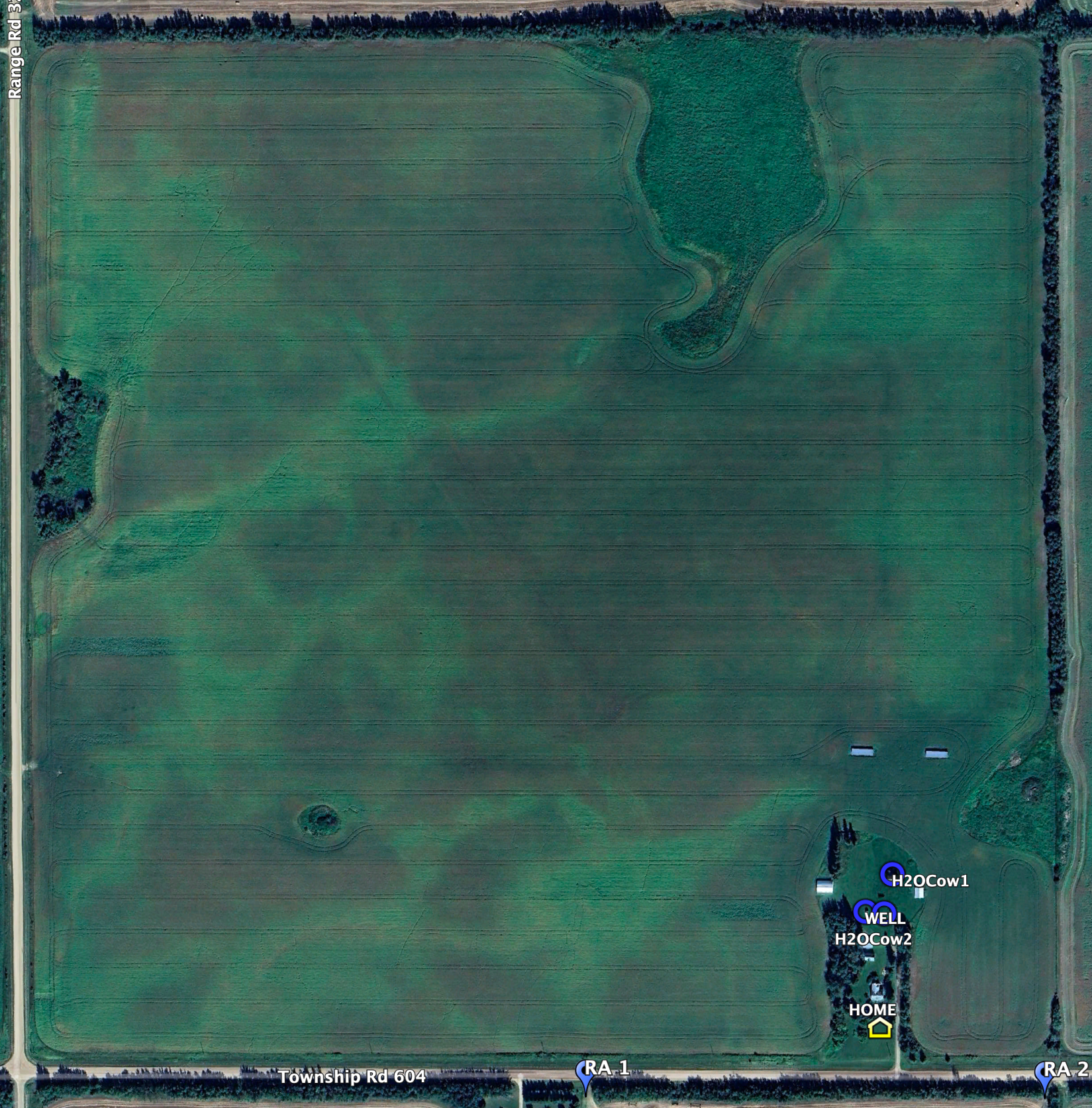
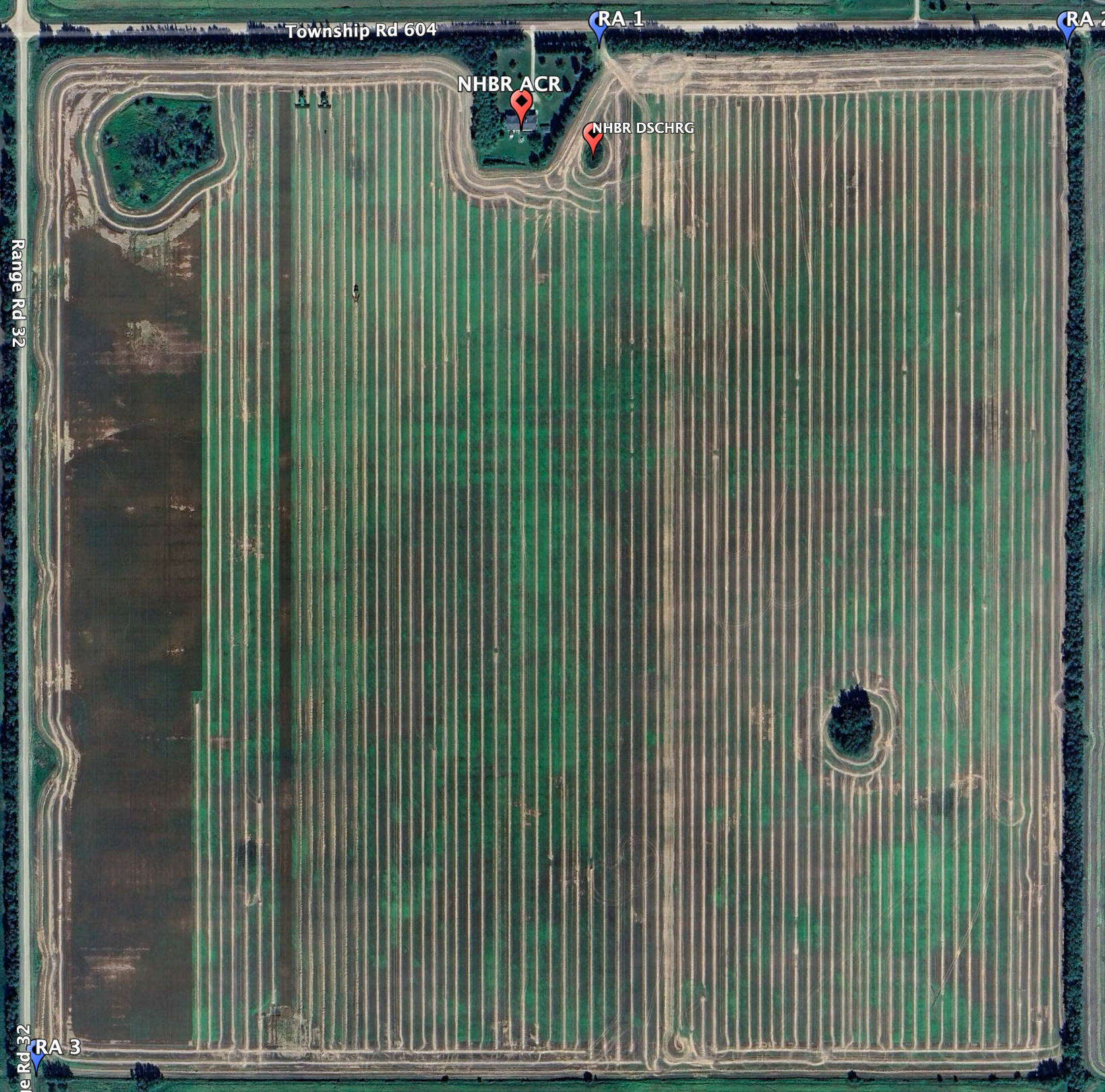
These two quarter sections (home and south quarters, shown above) are in the Grey Wooded Soil Zone of Alberta (~150 km northwest of Edmonton), indicating the area is well-suited for a high forage yield. Average rainfall for the area is 19 to 21 inches. The soil on the quarter is well-drained clay-loam with some mild undulations in the landscape.
Neither is flat by any means: in fact, as confirmed by Google Earth Pro (the best resource for developing grazing maps, as it’s completely free to download and use).
Home Quarter
The highest point[s] is at the southeast corner, and up towards the northeast corner, with an elevation drop of only 2 metres. However, when venturing westward, the elevation decreases significantly, with the lowest at the southwest corner and the next-lowest at the northwest corner. Some undulation in the landscape created random areas where water accumulates during significant rainfall events or snowmelt. These areas are visible not only in satellite imagery but also when walking the land.
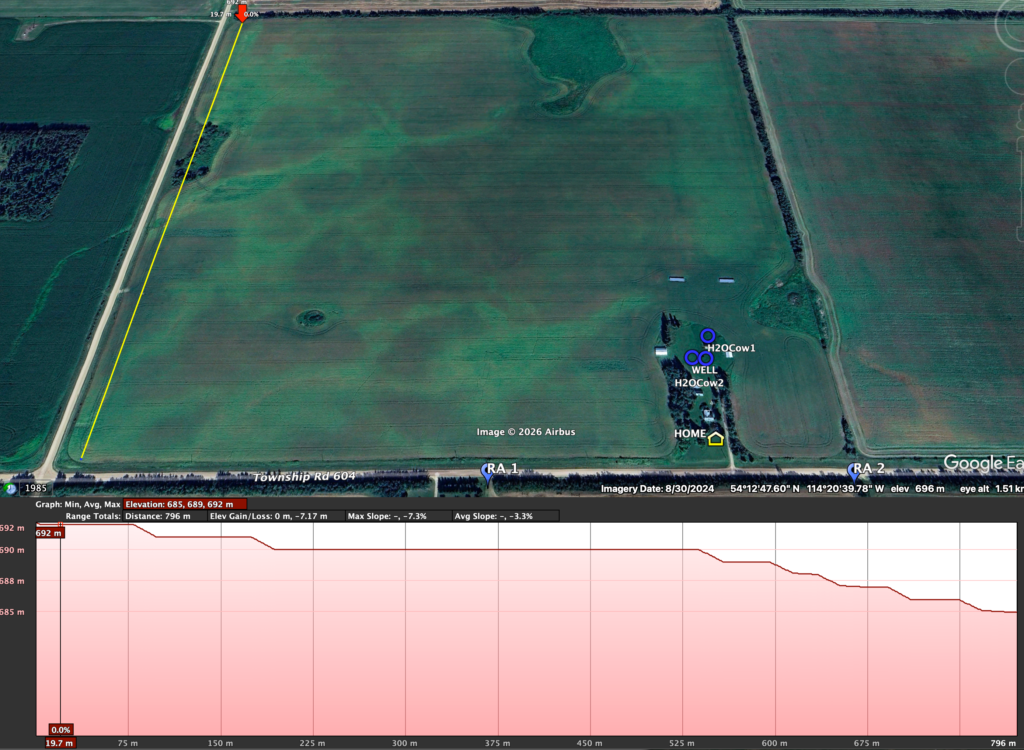
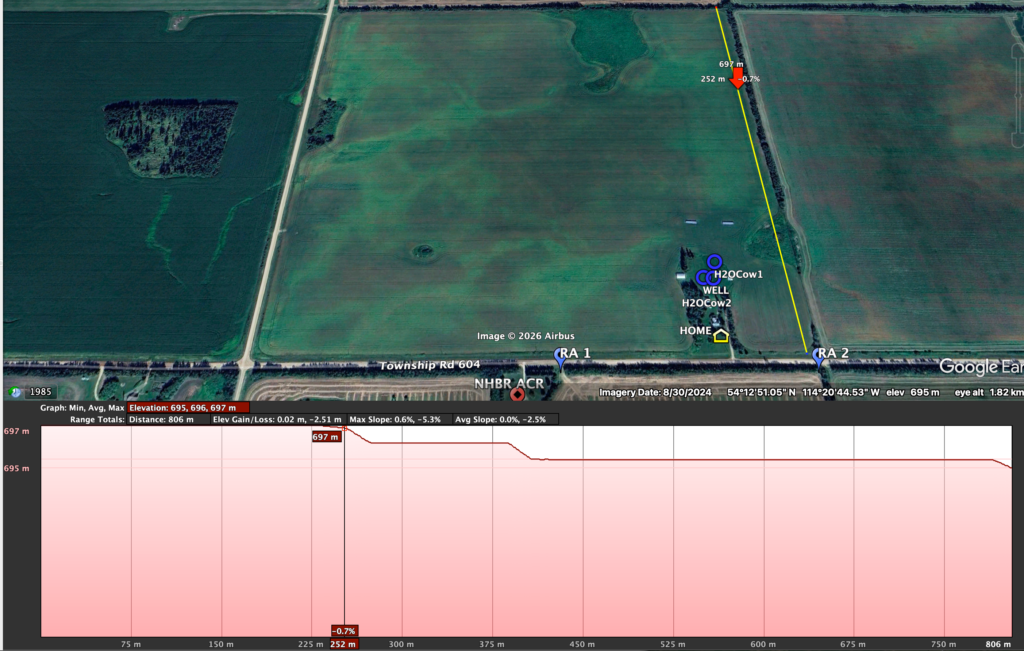
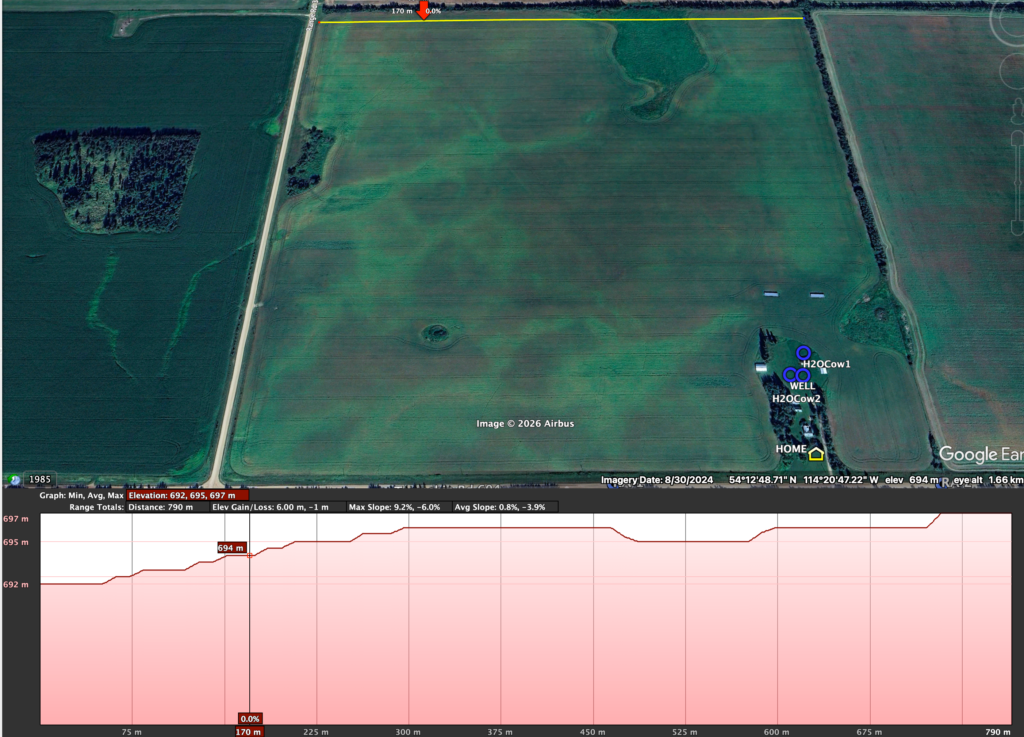
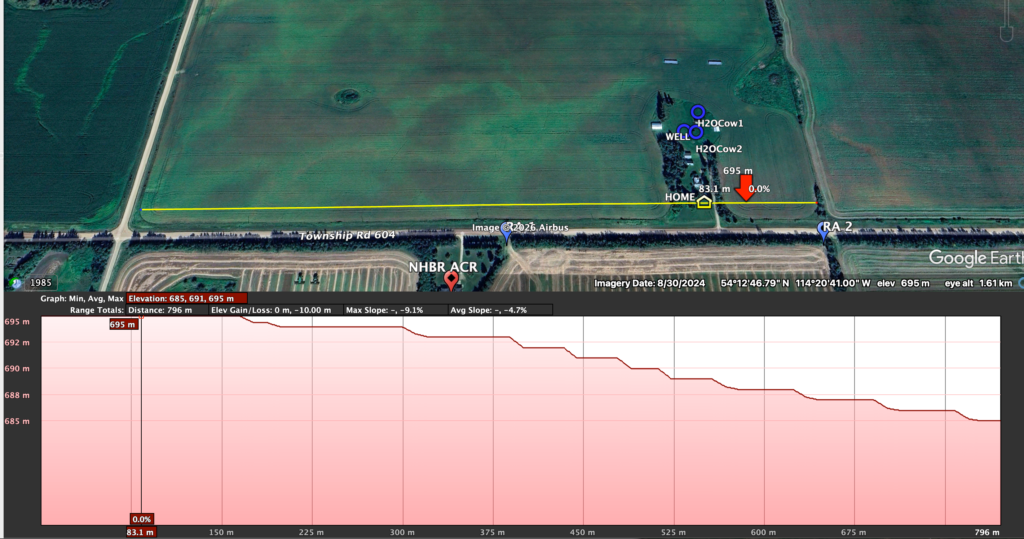
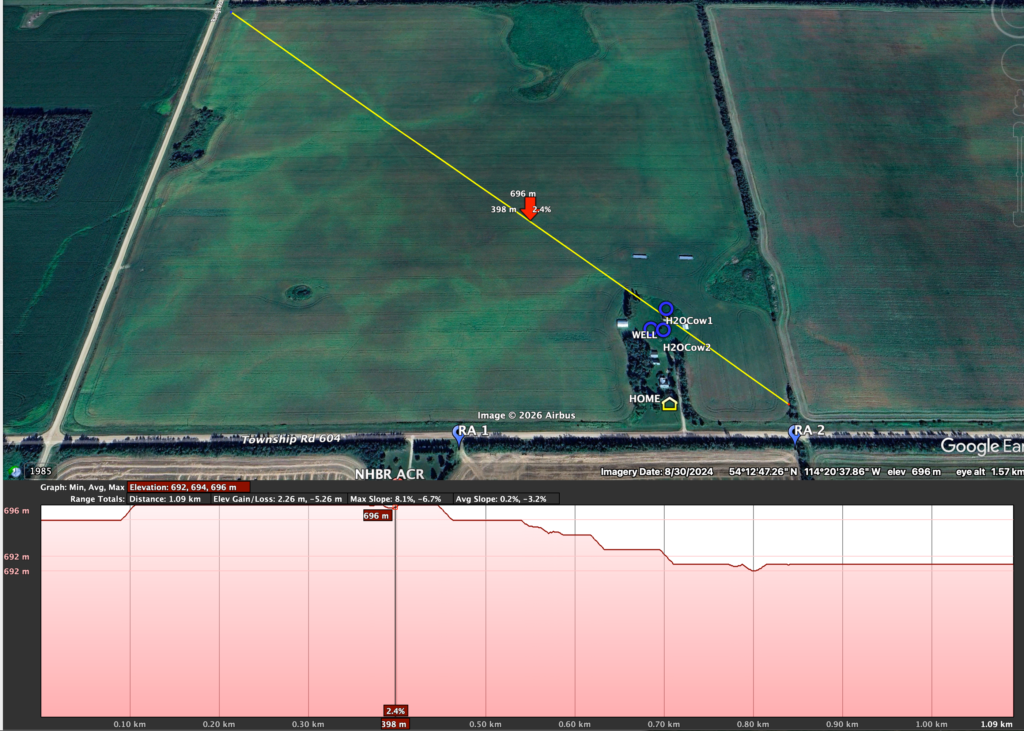
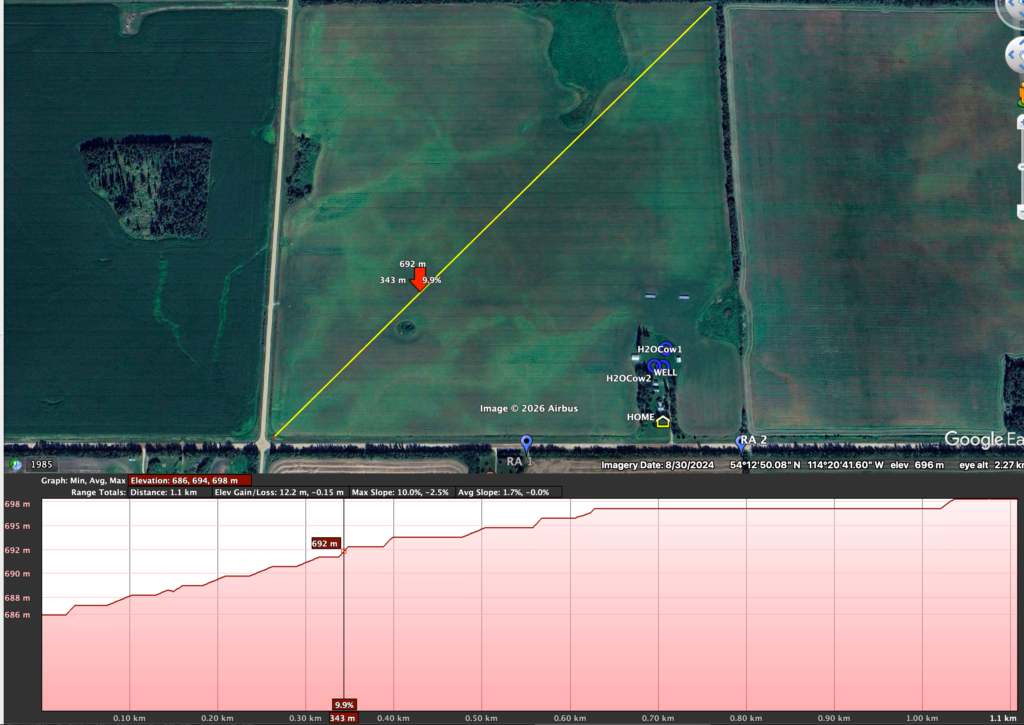
There is an acreage of 3 acres near the southeast corner of this quarter, which is the original home site for the home quarter and south quarter, and will be used as a home base for the grazing plan, particularly for water. It contains a well used for the house and for two main cattle waterers, as shown on the maps above, which are currently capped (but can be uncapped for future use).
There are three major areas that exist as ephemeral wetlands that tend to stay wet most of the year: along the east edge near the home quarter (~2 acres), a large 10.5-acre area to the north, and a 1.6-acre treed strip along the west edge, almost at the middle.
The entire quarter is under crop production. Almost two decades ago, it used to be pasture (100 acres making up the north half and a third of the east), as well as acreage for silage and hay. After 2009, everything was converted into annual crop production.
South Quarter
The highest point is in the northeast corner. From there, it slopes down not only to the south but also to the south-southwest, southwest, south-southwest, and west. There’s one spot in the middle of the quarter that is a high point, then it slopes down from there. There are some small undulations in random places where ephemeral natural slough areas occur, which I need to take into account. There are also a couple of treed spots that I can’t ignore in my grazing plan.
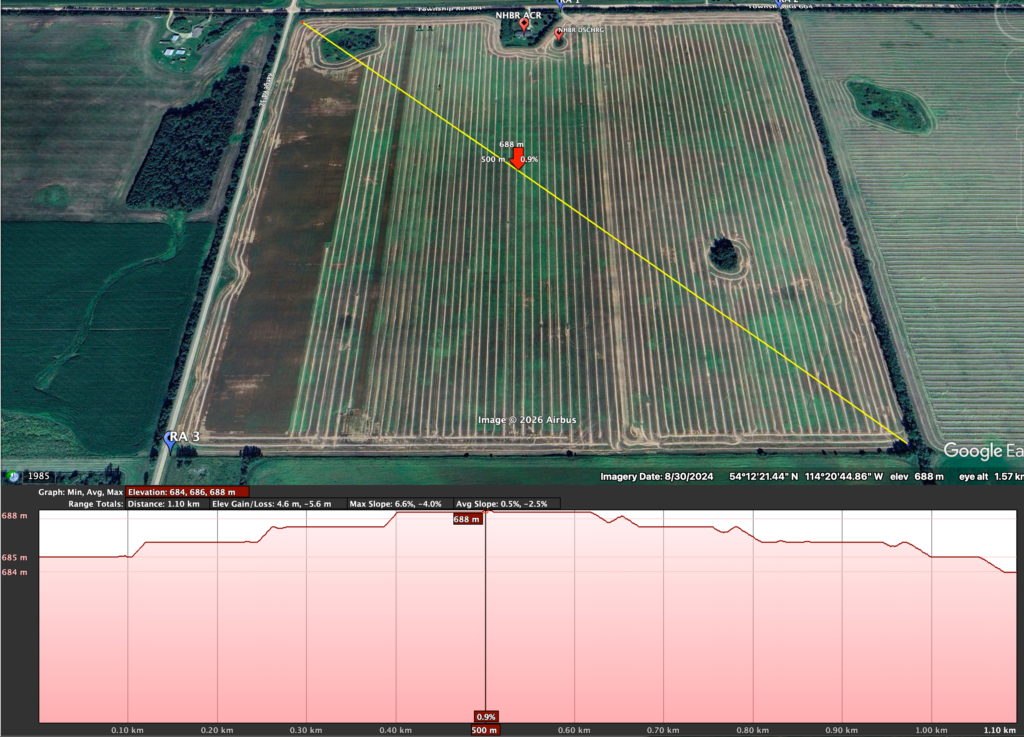
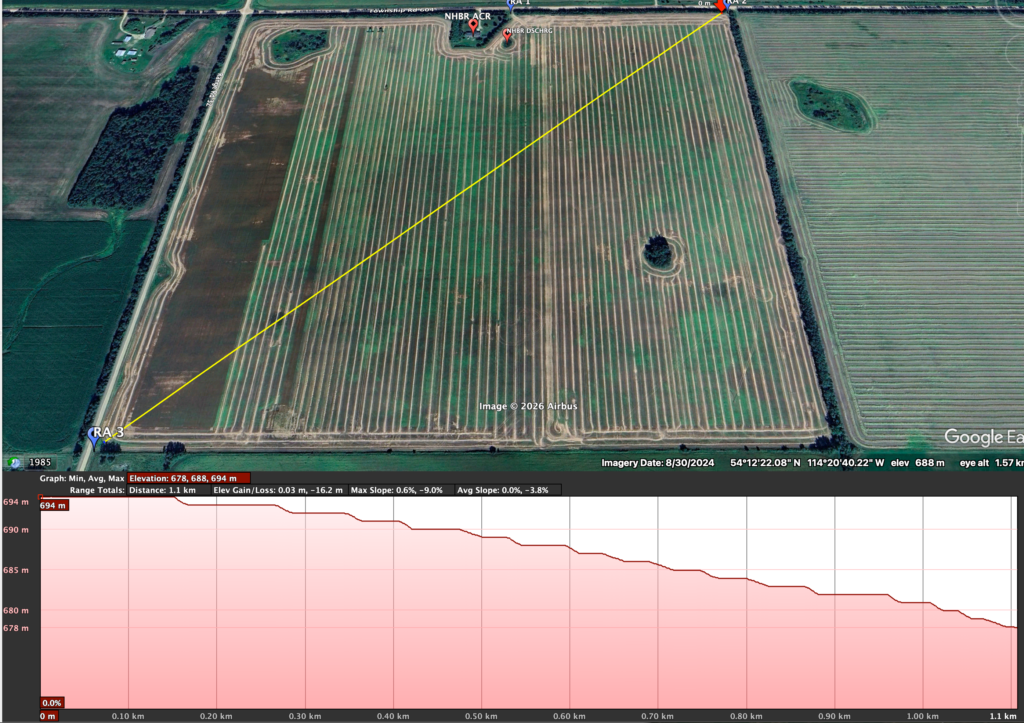
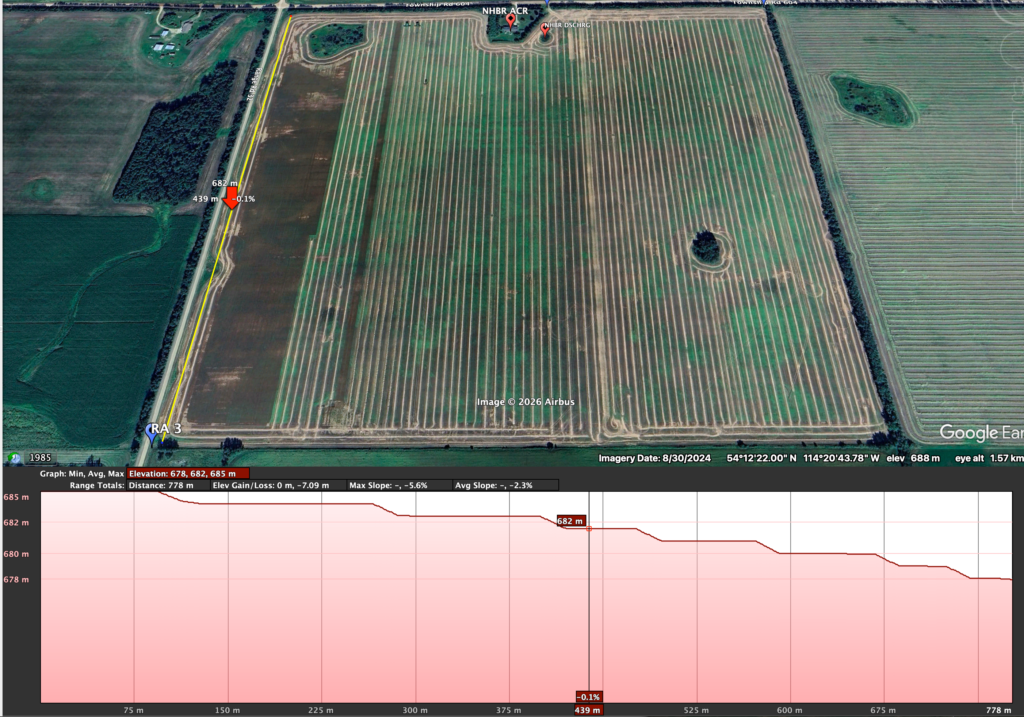
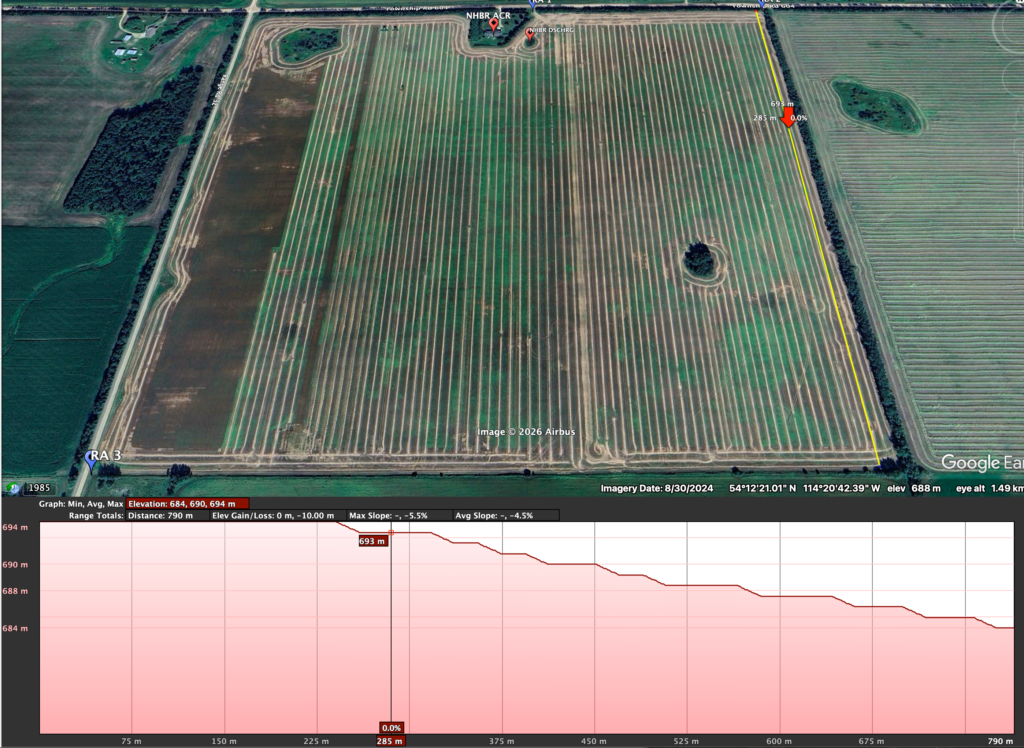
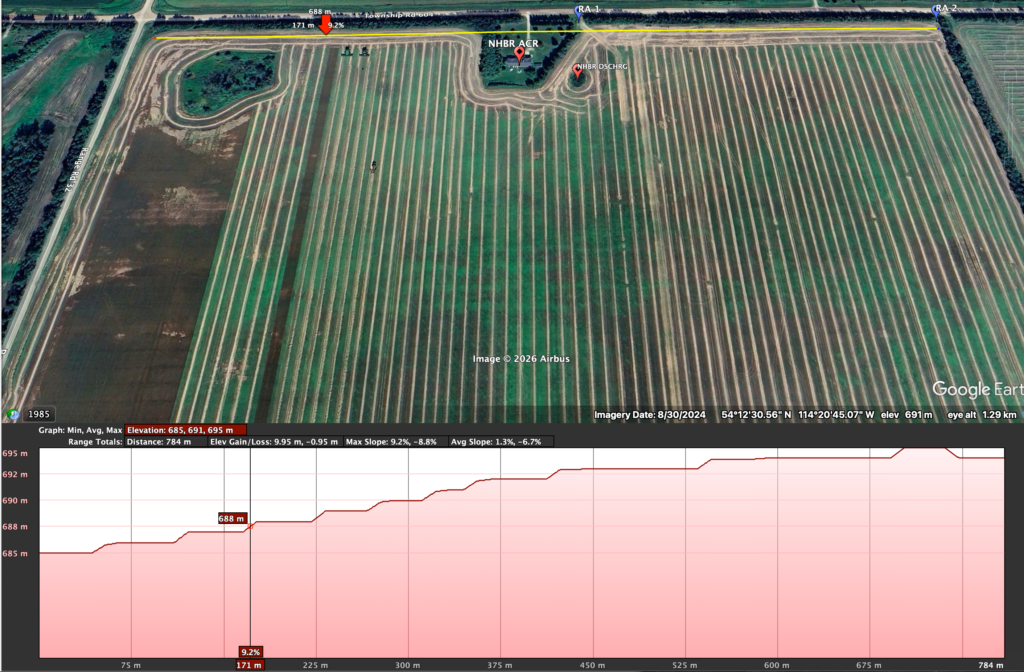
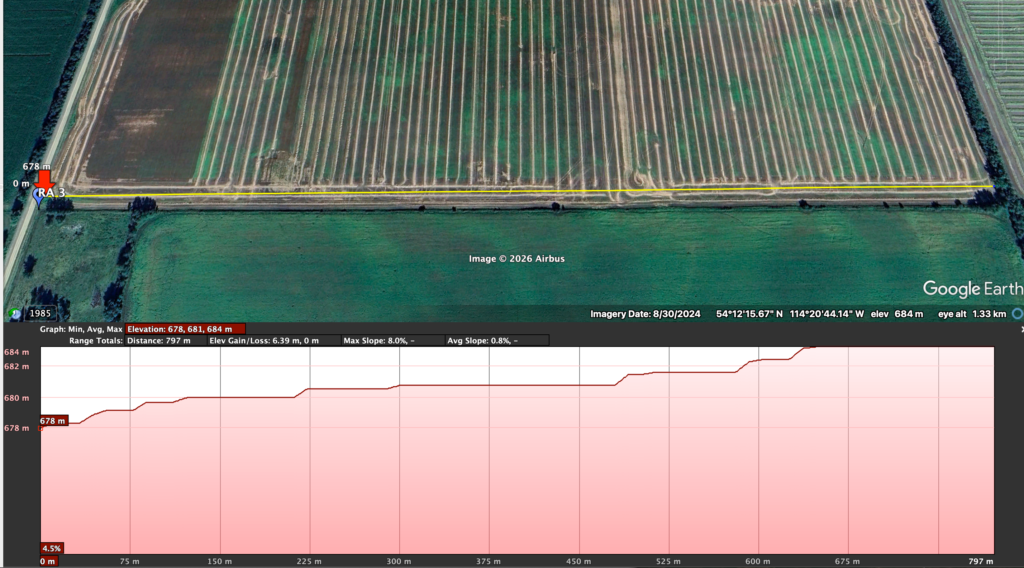
There are about 2 acres of land owned by neighbours, near the northern edge of this quarter. They have a sewer pump that is about 30 feet from their property fenceline, which must be respected. A county road runs along the northern edge and the western edge of the quarter section, and neighbours’ fields exist to the east and south. There are three primary road approach points: one at the northeast corner, one just to the east of the neighbour’s property, and the third at the southwest corner. The most commonly used approaches are the two at the north edge of the quarter.
Finally, the entire quarter is in annual crop production. Its previous crops have been wheat and canola. Years ago, it grew a great hay crop on one-third of the area (~60 acres), but that, too, was plowed under to produce cash crops.
What is Your Context?
Notice the list of things I went through to identify what I’m working with. Each contained a sublist of aspects to consider. You may or may not have more than what I have here.
- Environment
- Location – where are you located
- Climate – annual precipitation specifically
- Soil type – what soil zone is your farm located in?
- What is the specific soil type for the land? Is there clay, loam, sand, silt, or a combination?
- Topography & Other Natural Areas
- Identify if land is flat or undulating
- Identify any specific geographical formations that will affect your plan, if applicable.
- These areas may be very sensitive to grazing or impossible to access and must be excluded. Topographical features will influence how you plan your fencelines, water lines, and watering points.
- Identify any forested areas.
- Identify any existing bodies of water (sloughs, wetlands, lakes, creeks, dugouts, rivers, etc.) of whether they are ephemeral or not, that will be affected by hoof traffic.
- Please consider if they will be grazing exclusion areas, or if they can be briefly grazed without harm in your plan (not to be identified here)
- Existing Infrastructure
- Roads – where do they go? Private or public access?
- Railway – where does it run? Is there an access point that allows both vehicles and livestock to cross it?
- Neighbouring properties – acreages will “remove” pieces of land that affect the grazing plan.
- How large are they? Are there existing infrastructure[s] nearby that will also affect grazing plans?
- Where are neighbour’s fields and other properties that need to be excluded?
- Fences – any existing fences that are remaining
- important to note, especially if you intend on keeping them and building off them in your plan.
- Land Use
- What is the current state of the landbase you are targeting in your grazing plan?
- DO NOT PLACE YOUR GOALS HERE.
- Are you currently grazing this piece? Is it in annual crop production?
- What is the field history, in brief? What has grown there or is growing there?
- If grazing, what is the current grazing plan?
- How many animals are you grazing?
- How long are they there?
- Are they being continuously grazed (no restrictions on the entire parcel), or has there been any attempt to rotationally graze them? If the latter, what does the current plan look like (map with fencelines attached)
- What is the current state of the landbase you are targeting in your grazing plan?
It is extremely helpful to provide a map of the current infrastructure and natural areas you will need to address. Rather than drawing it on paper, it would be ideal to use satellite imagery of the target landbase to identify everything in points 2 and 3. Use that map as a reference to begin building your new grazing plan.
On To Part II…
In the next part to this series we will talk about what grazing plan[s] would be suitable for both quarter sections, as well as tips to discover what is best suited for your land.
This is a test to see how the comment section looks. I made a mistake of not putting in a comment section for the articles of this sub-site!
Test comment number two!
Test test
Test test